Broken Irish | Edward J. Delaney | Michael Patrick Brady

Broken Irish | Edward J. Delaney
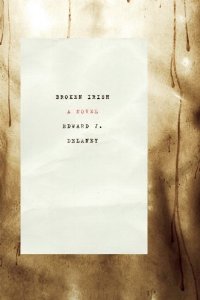
My review of Broken Irish by Edward J. Delaney ran today in the Boston Globe.

I was very pleased that Delaney managed to write a South Boston tragedy that didn’t lean too heavily on the genre-fiction standbys of organized crime or drug abuse. It’s not that those topics aren’t important or very real parts of South Boston’s history, it’s that writers and filmmakers seem disinterested in the actual human stories behind them and instead rely on them for cheap, lazy sensationalism. Really, after The Departed, what more is there to say about the South Boston mob in fiction?

:: Order Broken Irish at Amazon ::

He also doesn’t romanticize the struggles that poor Southie residents endured. I haven’t seen Good People, the Tony-award winning Broadway play about a struggling, South Boston single mother confronting a successful ex-boyfriend who made it out of the neighborhood, but the description alone gives me pause. There’s a habit in fiction of conflating deprivation with virtue, casting the poor as modern-day noble savages whose purpose is to teach more affluent, successful characters the important life lessons that their comfortable lifestyles have blinded them to. It’s patronizing and, again, lazy.

Broken Irish has enough respect for its characters that it’s willing to let them fail, and be stupid, and make bad choices. It’s willing to let them be real people, whose troubles have depth and are fraught with emotion. Delaney charts a bold course that addresses the issues of class, power, family, trust, and sexual exploitation, but never opts for the easy path, indulges in cliche, or does anything that leads the reader to believe he has no regard for his characters.

Rating: | Michael Patrick Brady

3 Comments Add your own

  • 1. Joan  |  September 11th, 2011 at 8:20 pm

    I lead the book club at Porter Square Books in Cambridge and enjoyed your review very much. The Delaney book sounds like one that would be great for discussing. Your description of characters who fall, are stupid, and make bad choices assures me that the work is authentic, in that we are all like that. Thank you!
    Joan
    P.S. I did notice that you used “disinterested” to mean, I assume, uninterested. It’s a small thing, but, as you are a writer, you would want to know. (Apologies. Retired English teacher. We never quit.)

  • 2. mpb  |  September 11th, 2011 at 8:29 pm

    Thanks, Joan. I think we’re running up on a prescriptivist/descriptivist conflict with regards to “disinterested.” ;)

  • 3. mikemc  |  February 19th, 2012 at 7:49 pm

    Finding Delaney’s Broken Irish in my local library was certainly a stroke of good fortune.The book became personal to me on many levels. If the guilt that comes with being Irish and Catholic isn’t enough throw in alcoholism and Cleric abuse. It was interesting to read my thoughts from someone else s pen.
    Please pass on my regards to Mr.Delaney if at all possible.

  • Leave a Comment

    (Required)

    (Required, hidden)

    Trackback this post

    Notations»

    05.14.12
    05.06.12

    How did Finland become one of the top educational systems in the world? By focusing on equality, not competition.

    05.05.12
    04.25.12

    “He believes that fairness is defined by market outcomes. To the extent that unfairness exists, it is solely the doing of government: clean energy, laws permitting union dues, overpaid government employees, and so on.” Romney’s perverse ‘fairness.’


    In Rotation

    With the Animals by Noelle RevasOur Lady of Alice Bhatti by Mohammed Hanif

    In the Shadow of Young Girls in Flower - Marcel ProustWish You Were Here - Graham Swift

    Nixonland - Rich PerlsteinGame Change - John Heilemann and Mark Halperin

    Lolita - Vladimir NabokovTraveler of the Century by Andres Neuman

    Norumbega Park by Anthony GiardinaSwann's Way by Marcel Proust, Translated by Lydia Davis